There’s no place like Homer, especially when it comes to bald eagle photography! I just got back from my fifth winter trip there, and while it was the toughest by far in terms of the brutal cold, it was also the most rewarding. I have finally thawed out enough such that I can apply my fingers to the keyboard!
It has been said that the majority of published bald eagle pictures are taken in this sleepy little fishing town on Kachemak Bay, and, if true, that would not surprise me. The magic here is lots of wintering eagles, very friendly eagles to be exact. It all started perhaps 40 years ago when a retired rodeo performer, Jean Keene, moved to Alaska to get away from it all, opening up a small campground on the Homer Spit on Alaska’s Kenai Peninsula.
One curious eagle showed up at her camper one fateful day, and the rest is history. A friendship was built between woman and bird, involving a few tasty herring handouts. The eagle told her mate, apparently, as two eagles showed up the following winter! This eagle pair had friends! The pattern escalated until upwards of 300 eagles were showing up in the Eagle Lady’s backyard by the 1990s. Jean was amenable to photographers camping out in her yard during the morning feeding sessions, and top photographers the world over made the pilgrimage to Homer, including yours truly. I had the good fortune to befriend Jean and shoot with her in two different winters.
Jean passed away in 2009, and the city council passed a law to prohibit the feeding of eagles from land. It had become controversial in town. That birthed a new tradition of local boat (water taxi) captains taking photography tour groups across the bay, outside of city limits, to feed the hundreds of eagles staging there every winter. Feeding over the water opened up all kinds of opportunities for new and creative compositions. Jean only fed the birds on the beach, which provided many wonderful moments, yet their prowess of flight on the water was largely untapped. Now the Jeanie is out of the bottle, so to speak, as you shall see momentarily!
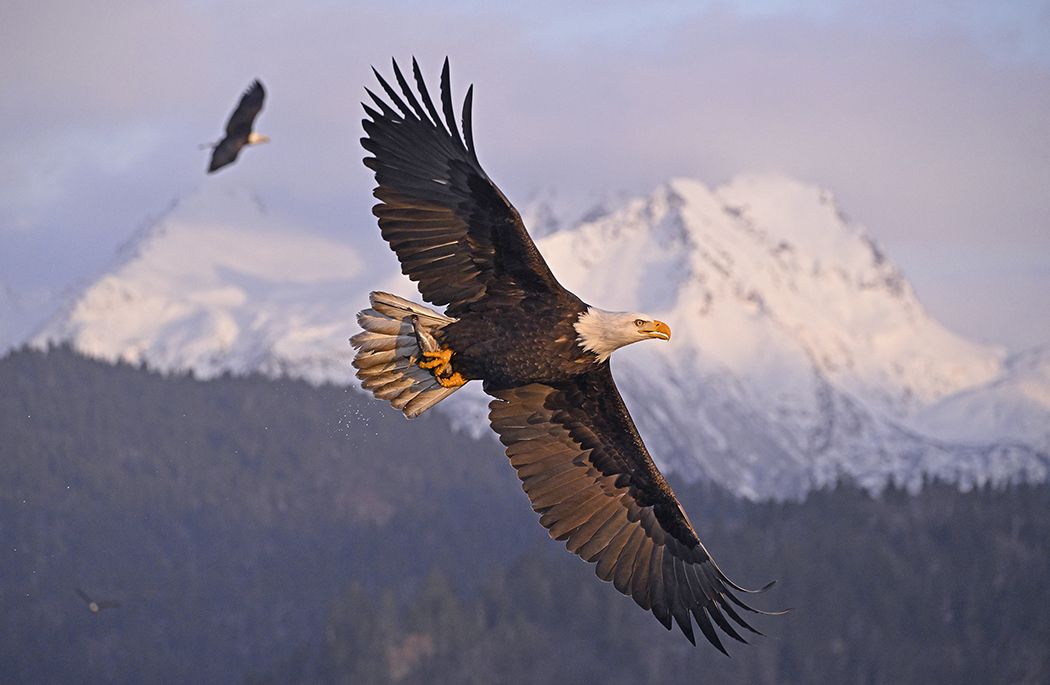
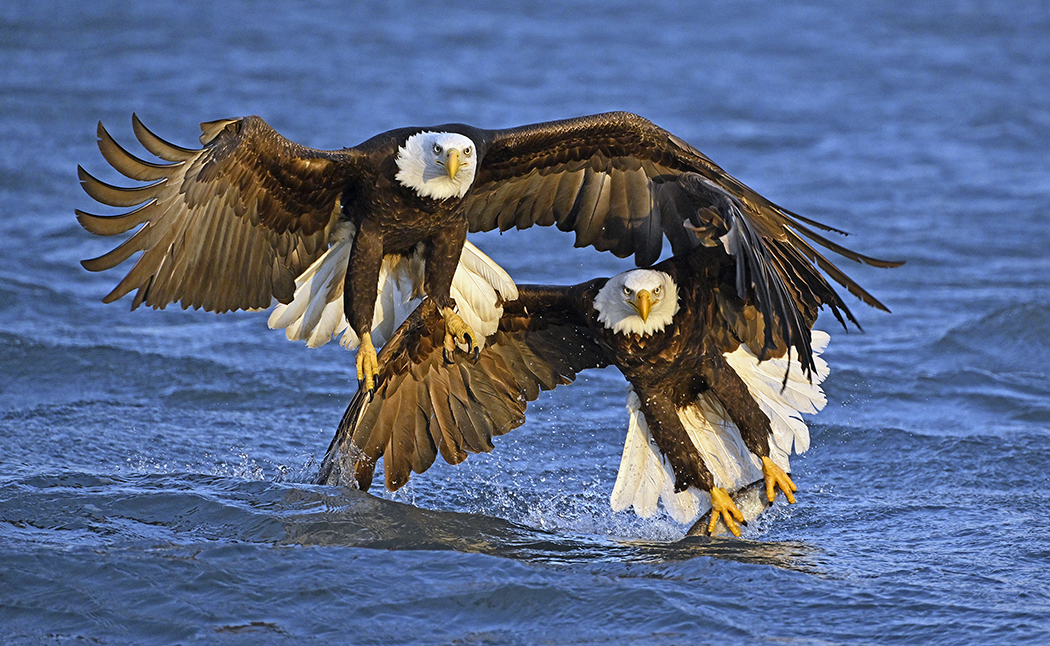
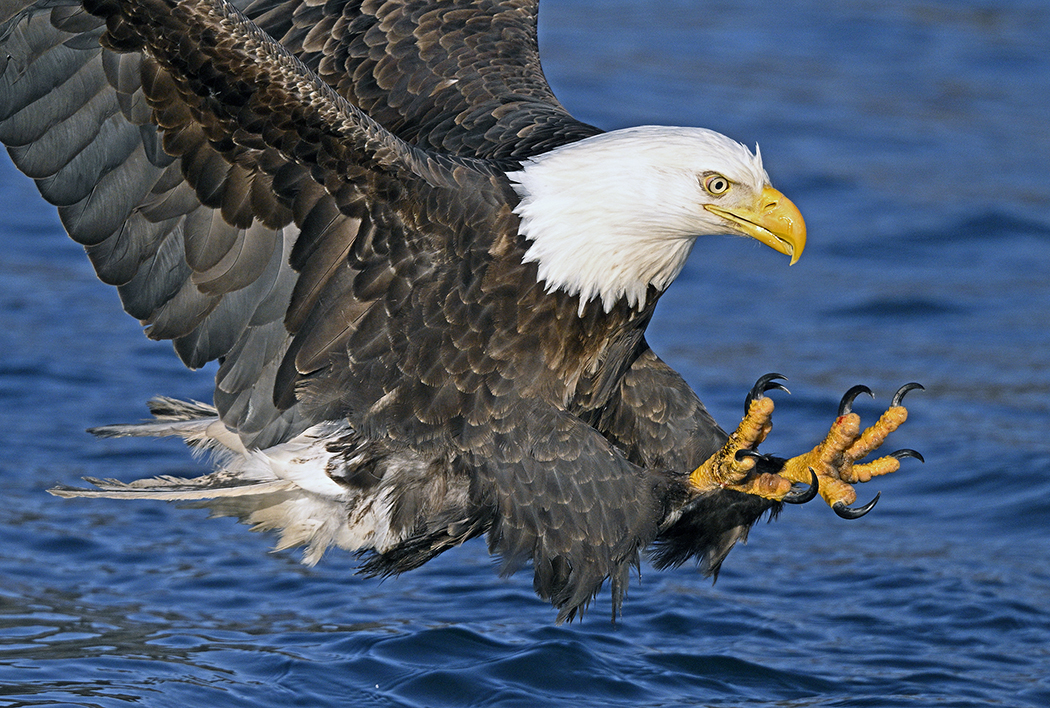
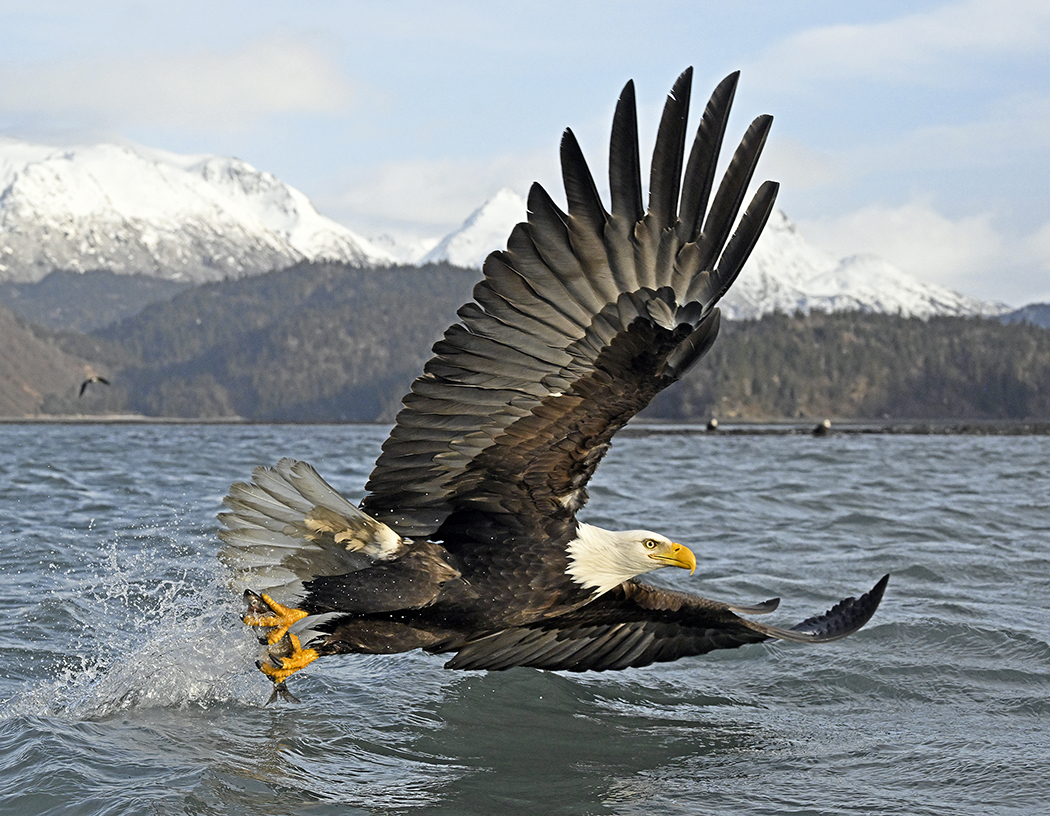
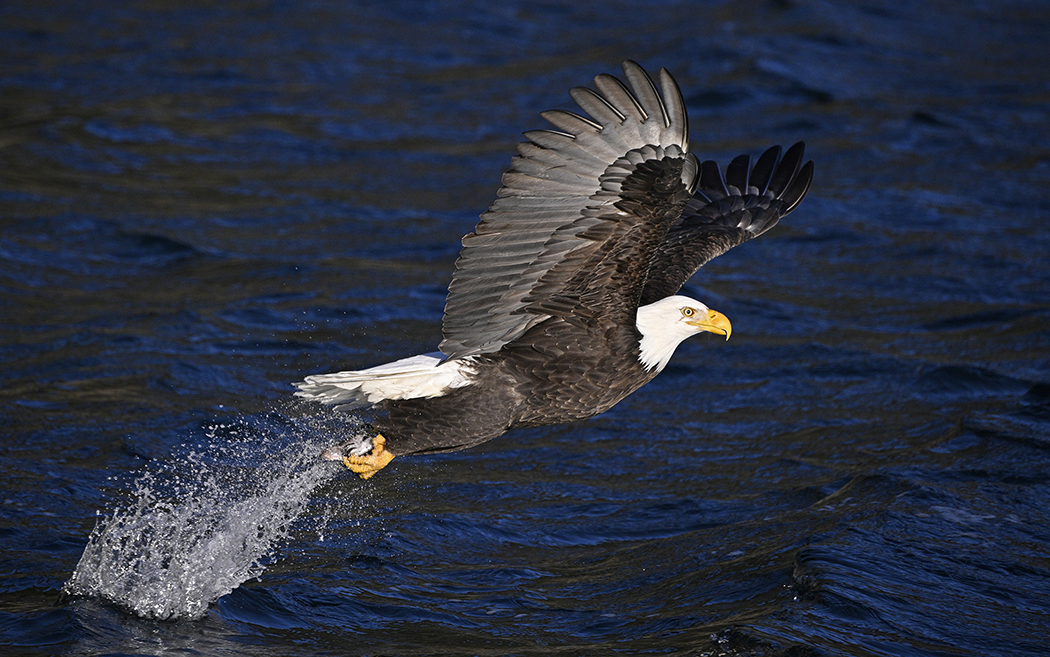
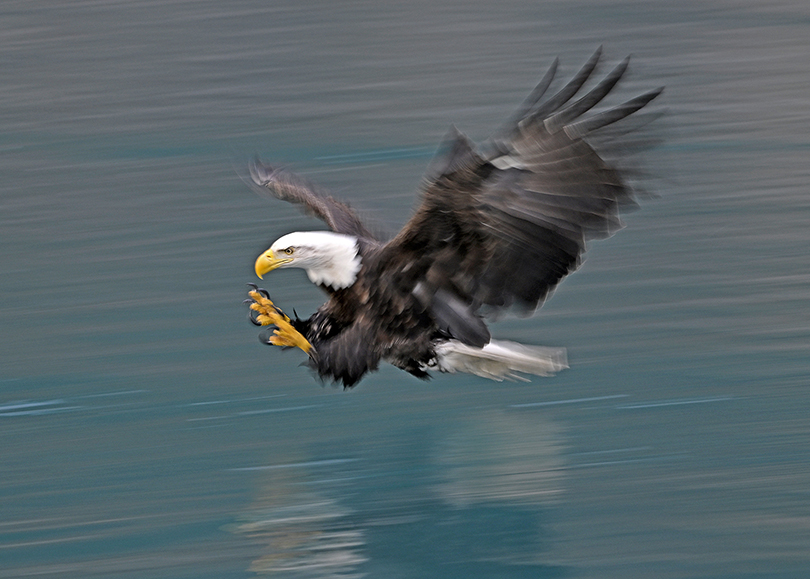
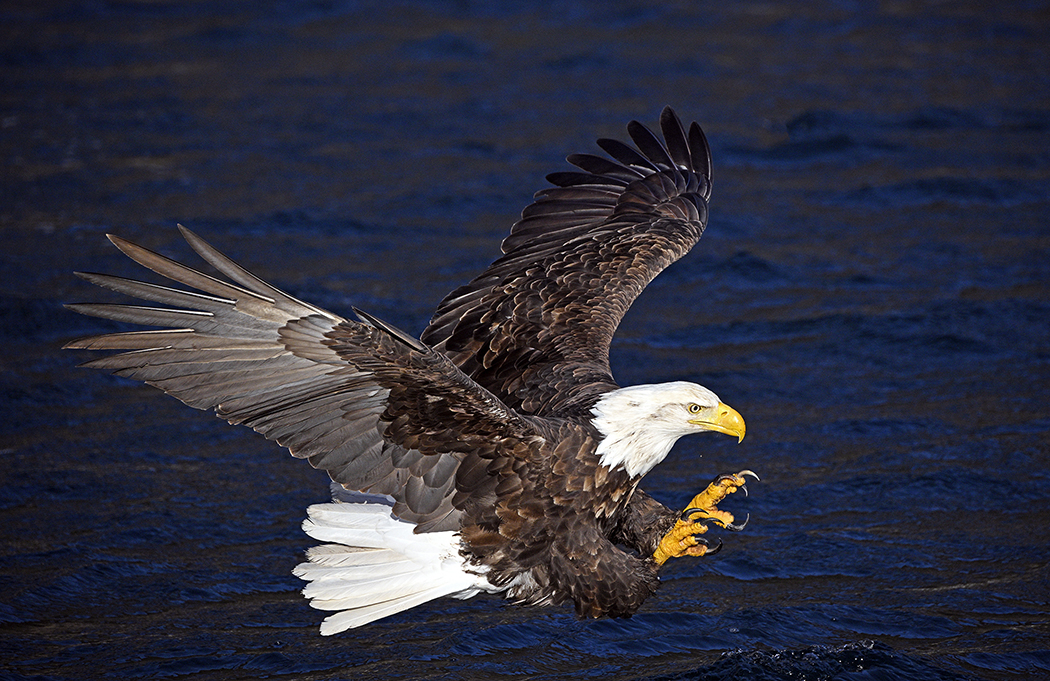
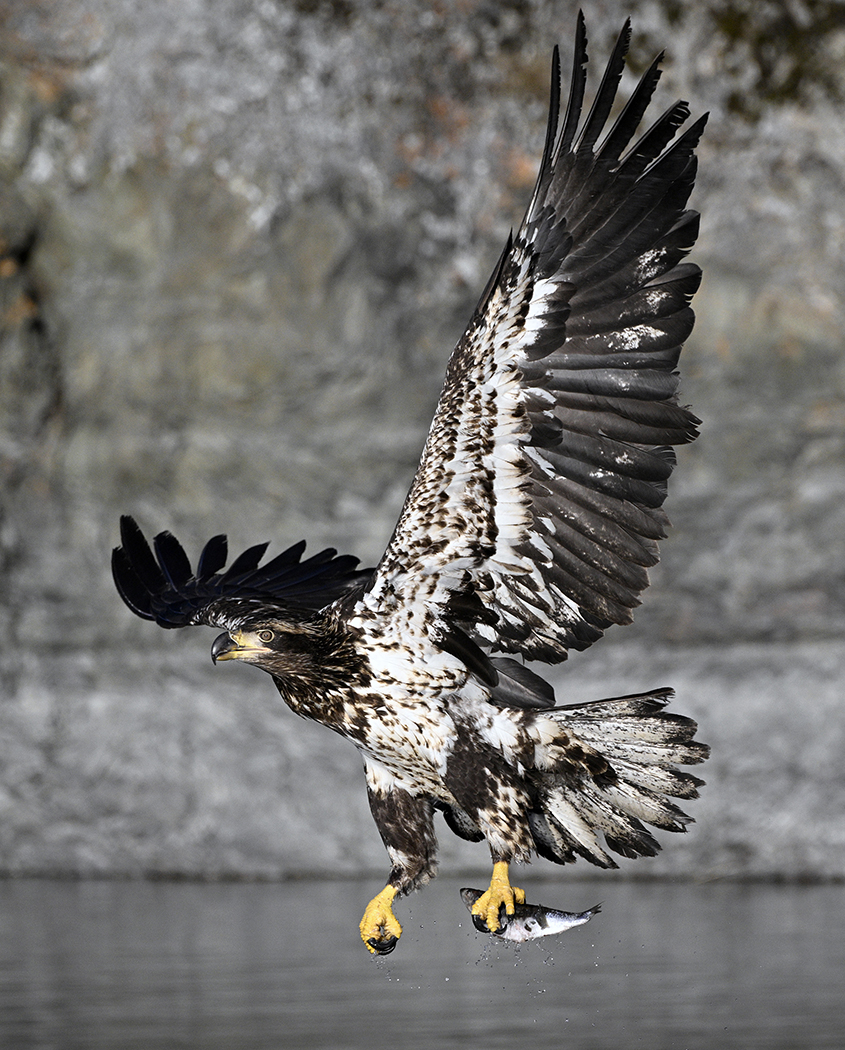
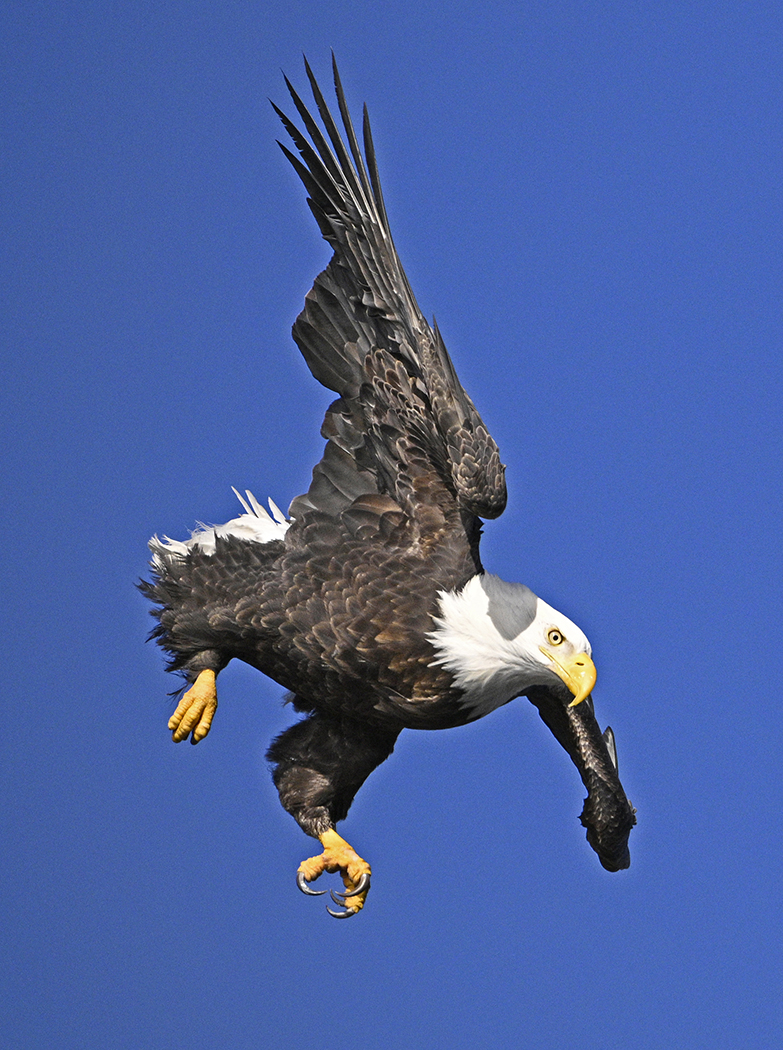
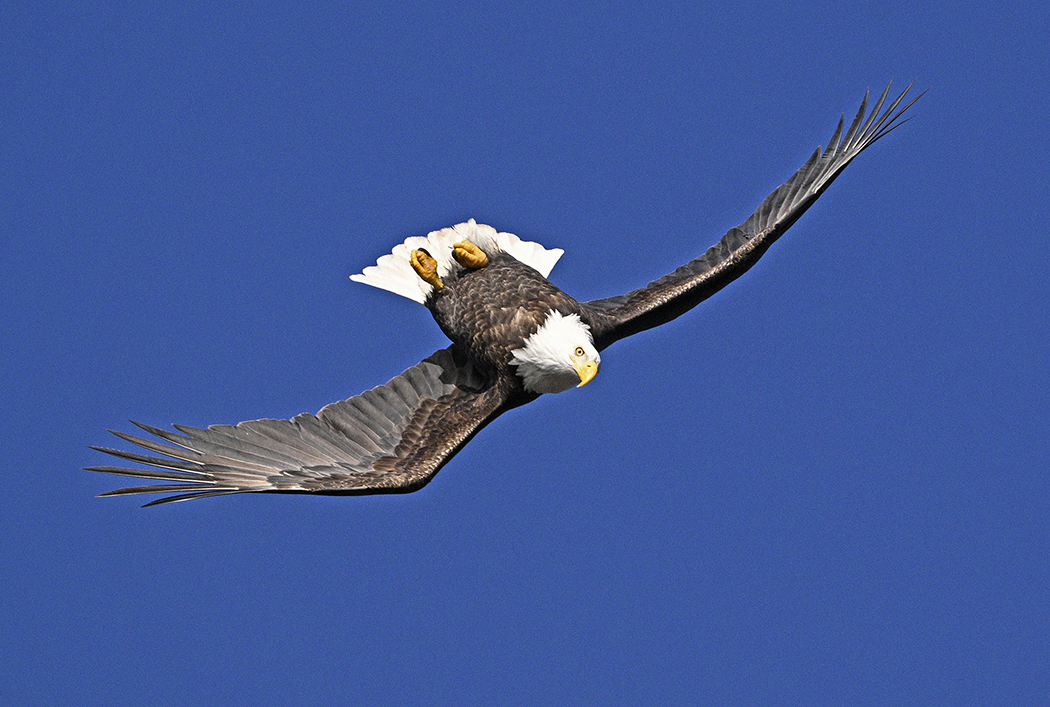
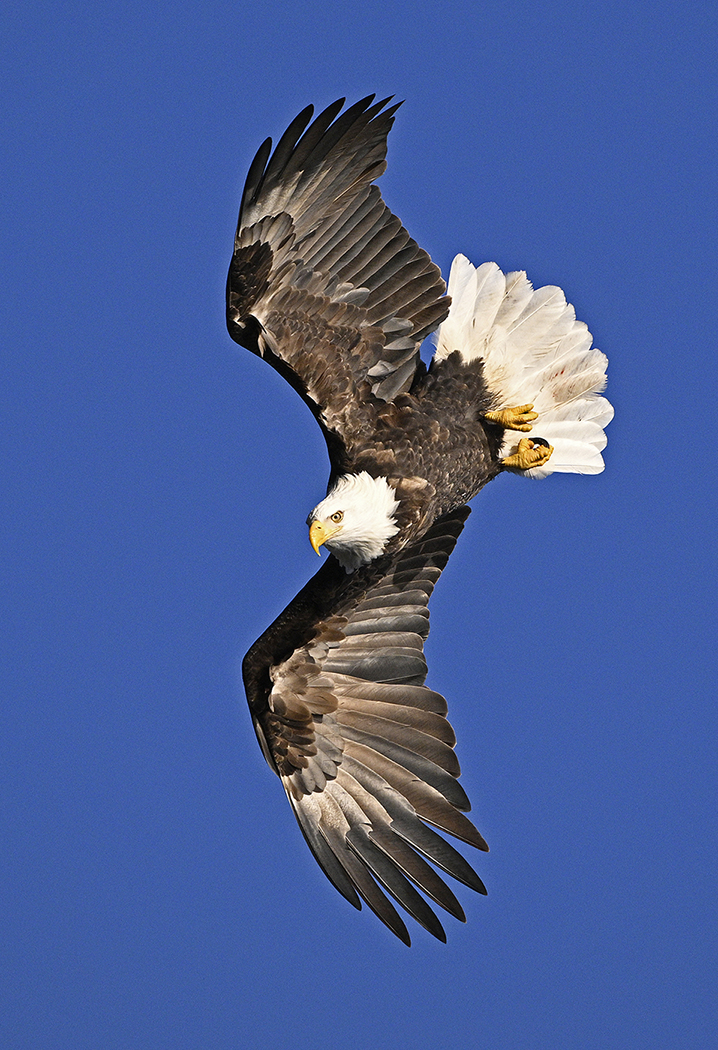
It’s a great joy to experience our national symbol in their element, sighting fish from up high and launching the attack sequence. Some birds will roll over and actually fly upside down for a brief moment to get a proper angle of attack, plunging from the sky with wheels down, talons at the ready. Unlike some waterbirds that plunge into the water for fish (osprey, terns, pelicans) eagles do not immerse their bodies, instead skimming just above the surface such that their feet and talons can extend to grasp surface fish. For a split second the talons are fully flared horizontally just before lunging into the target, often with a big splash. On rare occasions two birds would go after the same fish for some awesome action shots.
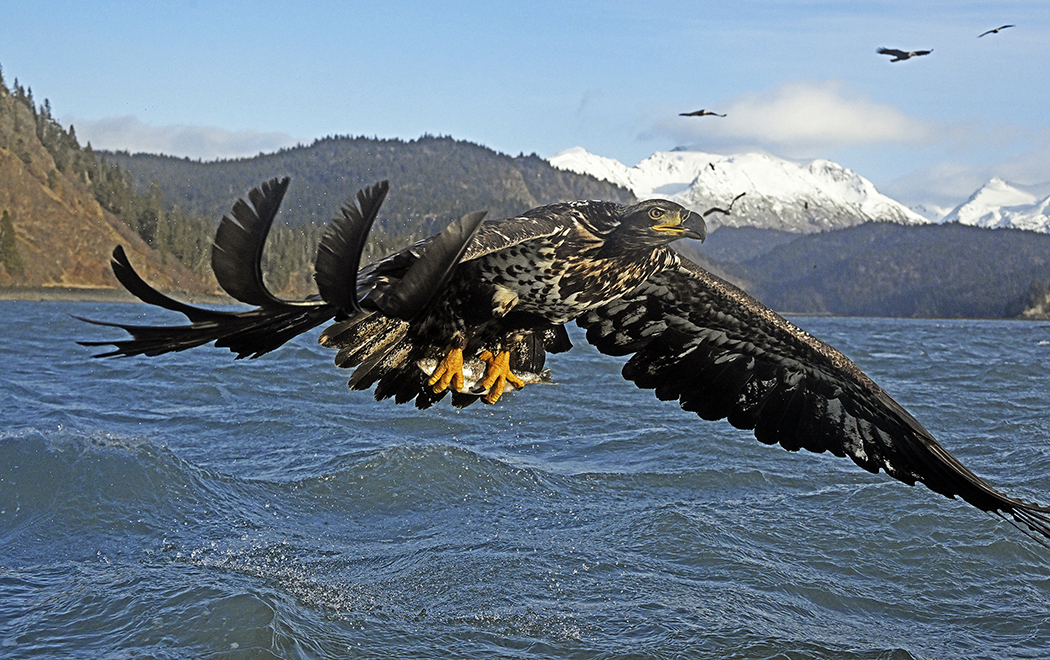
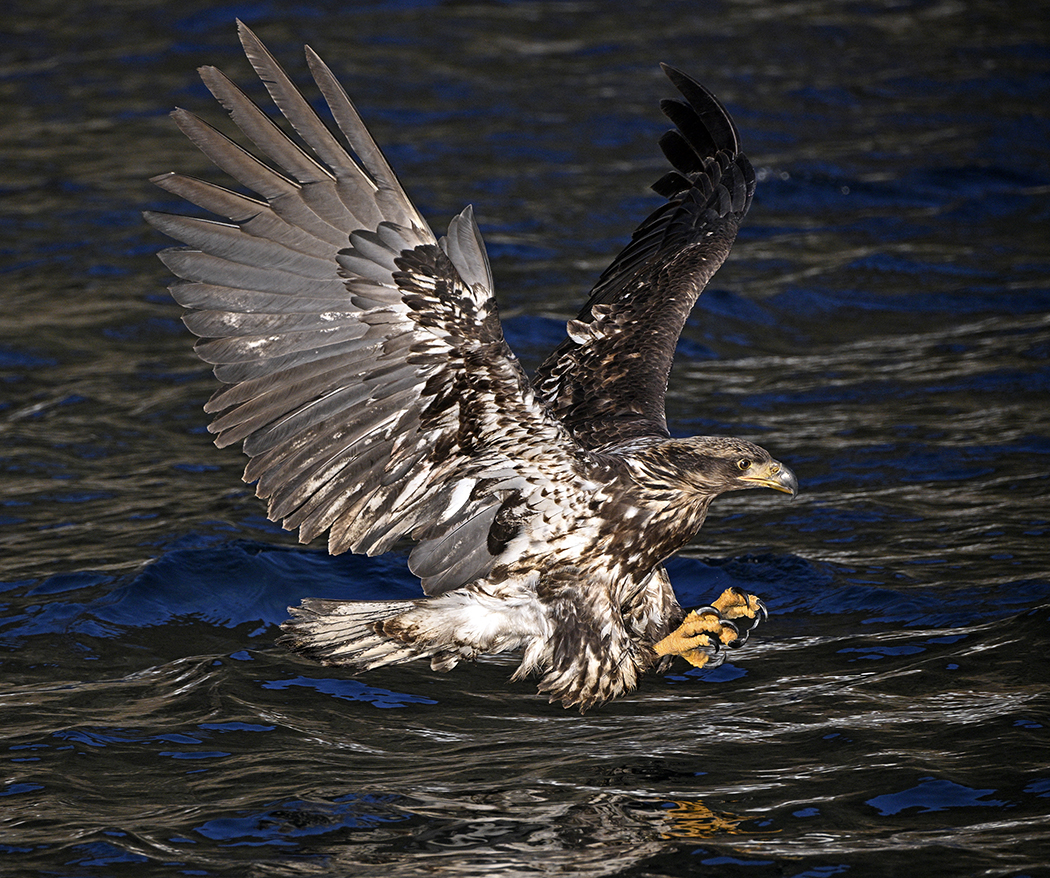
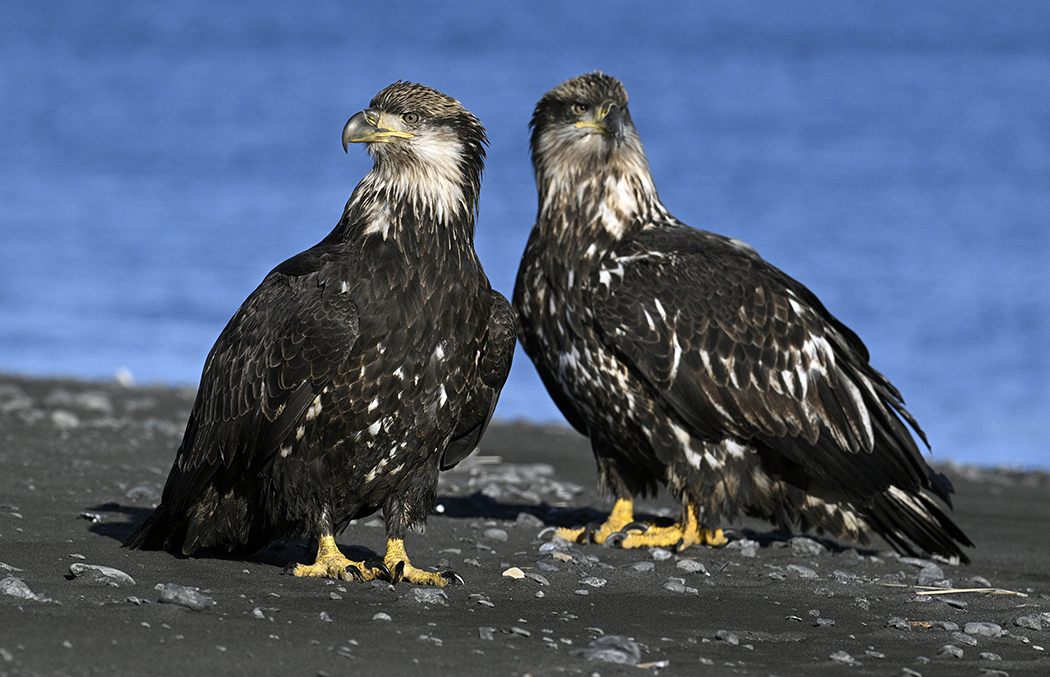
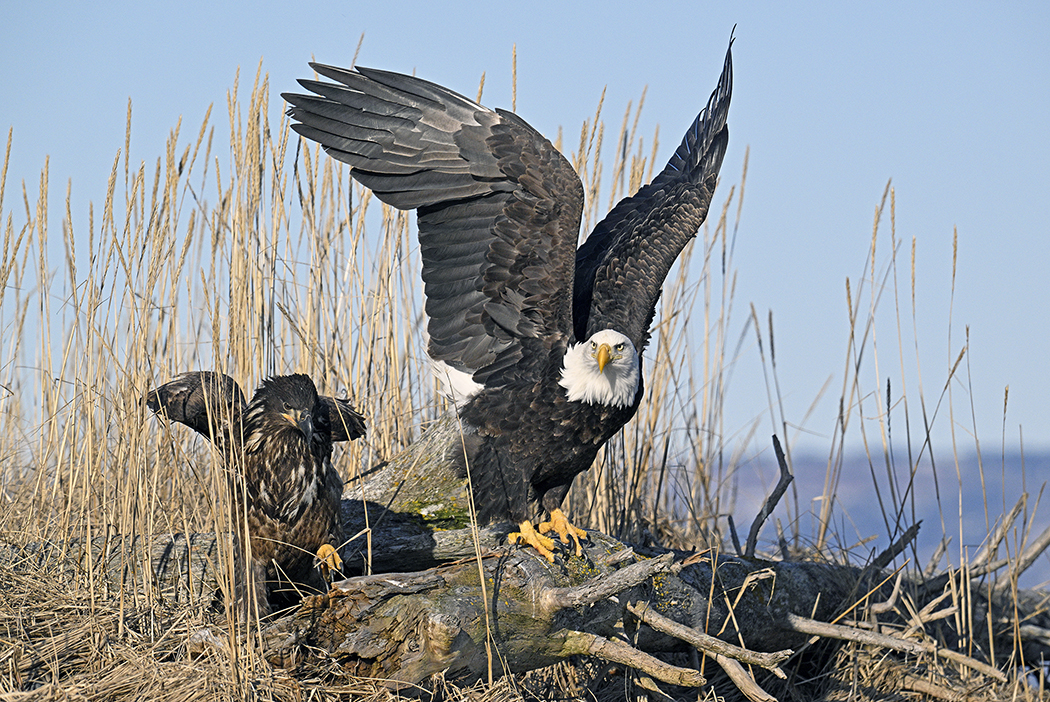
Many people are unaware that it takes five years for a bald eagle to acquire a snow white head and tail. Each year marks a progression from mostly dark brown plumage to the stunning adult costume. Another interesting fact is that in eagles and other birds of prey, the female is about a third bigger than the male. The juveniles appear to be larger than the adults, having feasted on fish from their parents before fledging.
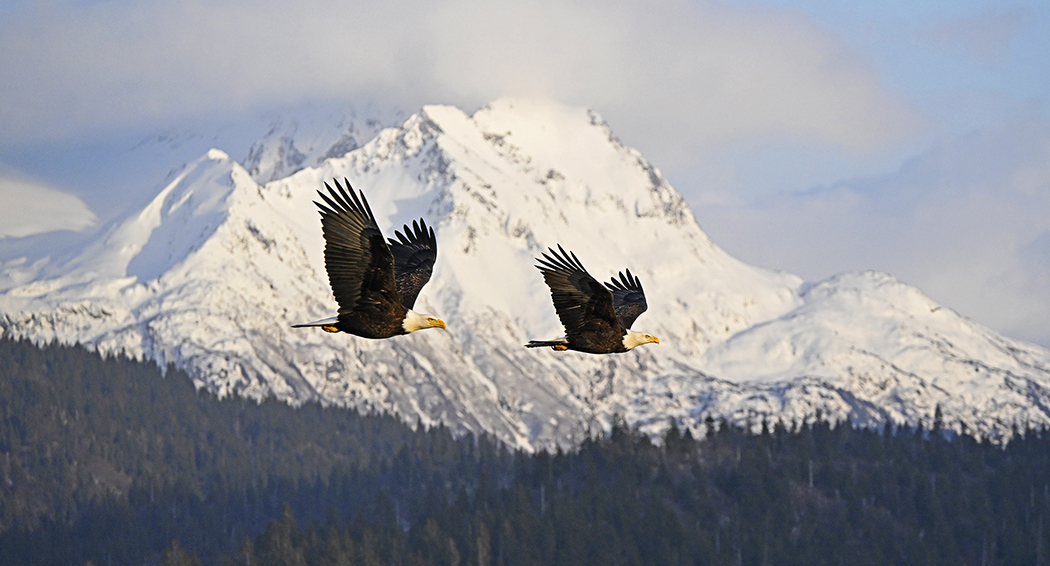
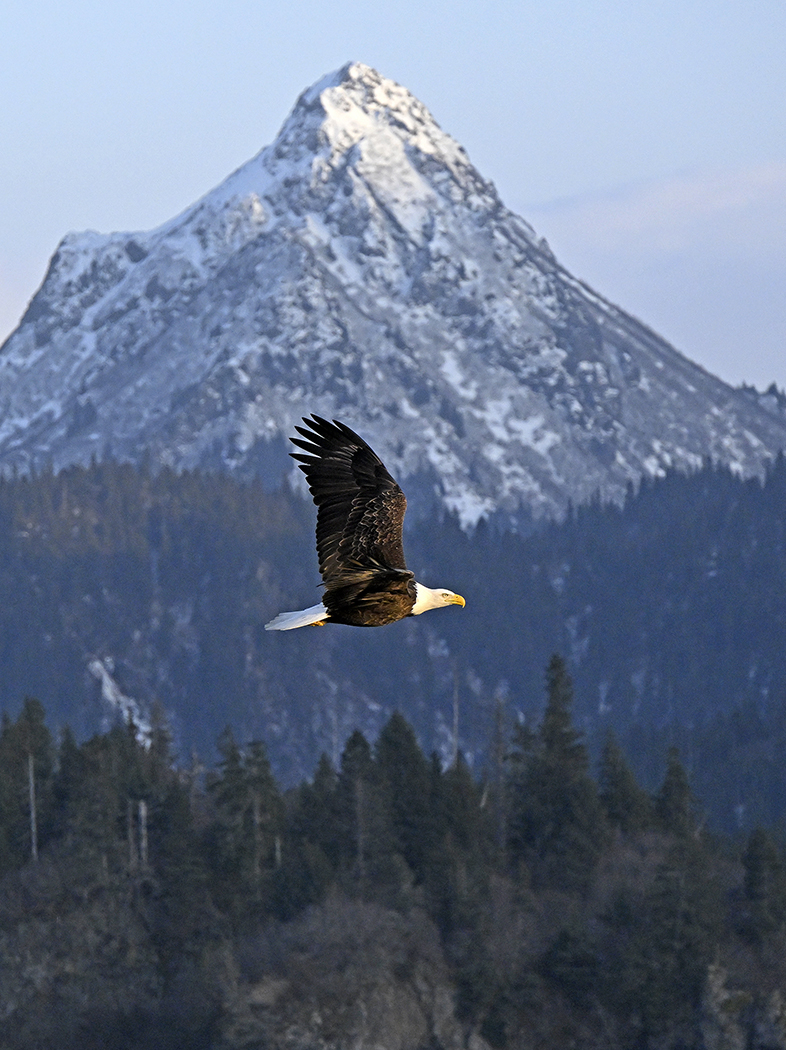
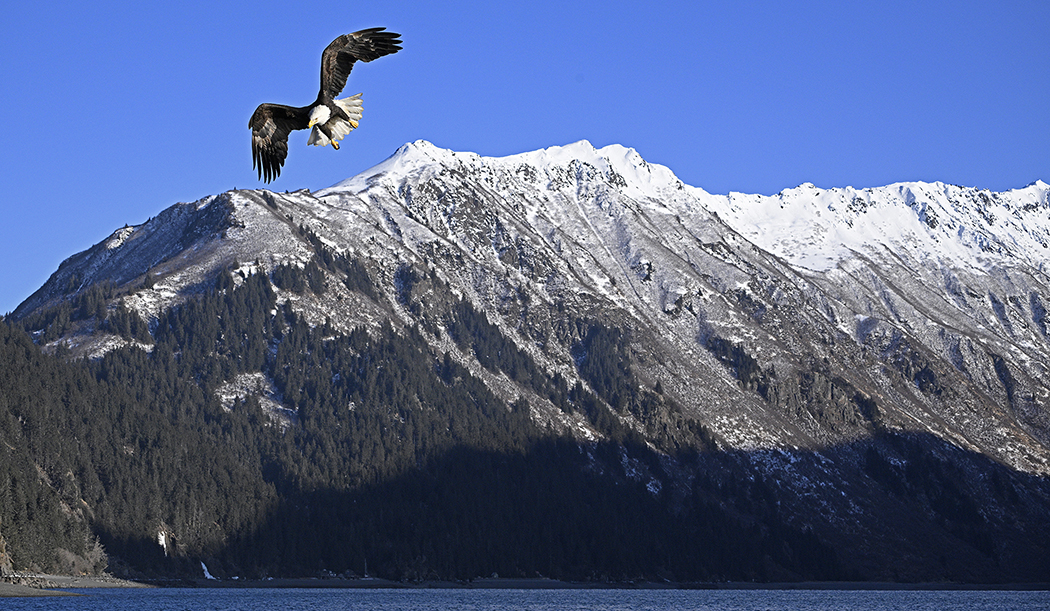
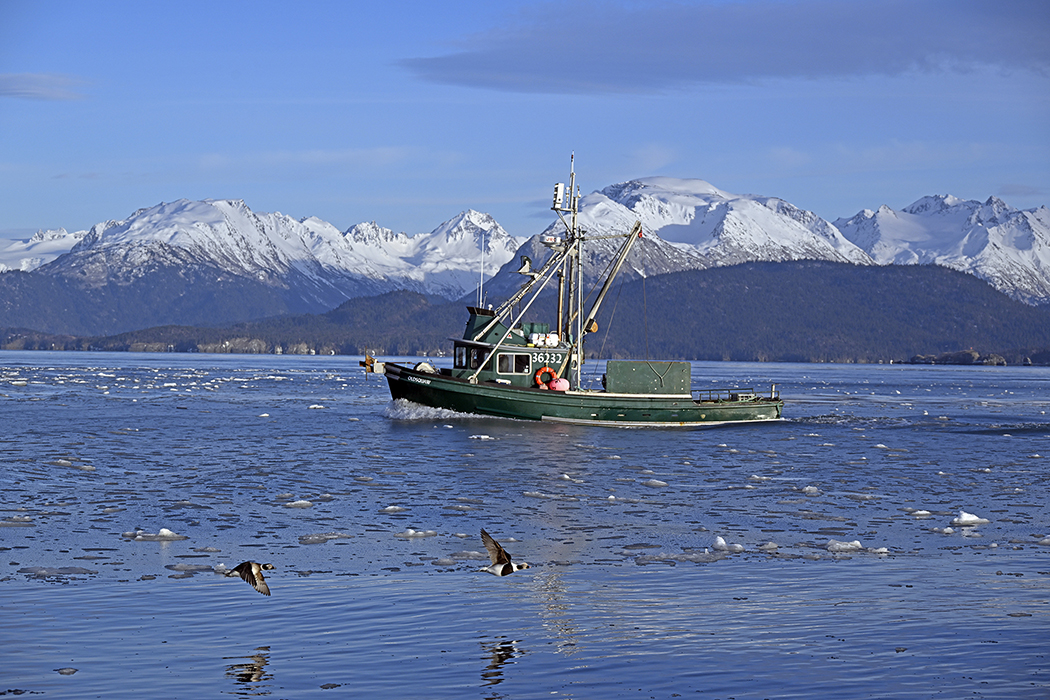
One of the other unique draws of Homer is the spectacular scenery. Across the bay, mountains rise up from all of the coves, offering wonderful opportunities for dramatic “birdscapes.” I love nothing more than showcasing a bird in its preferred habitat. I keyed in on these types pf shots this trip, as I have already shot thousands of tight images of eagles in flight and perched.
The weather was quite challenging, for than any of the prior 4 winter trips to Homer. While it was sunny nearly the whole time, it was well below freezing. One morning we were all breathing fireballs while packed in the boat’s tiny cabin, our exhaust backlit by the rising sun. The captain said it was -7 degrees Fahrenheit. It became a mental game to not get psyched out by the numbing cold.
To get to the prime inlets for eagle feeding across Kachemak Bay, there’s a 30 minute crossing that can be smooth or an hour-long ball buster, depending on winds, tides and boat direction. Virtually all of my best images came from the 4thsession, when 3 out of the 5 photographers in our group elected not to go out based on the brutal bay crossing that morning. At one point we rolled down a wave in an extremely uncomfortable angle, and there was a hush of silence as it felt like we were going to capsize. It was of zero consequence that a Coast Guard rescue was just 30 minutes away from the Homer harbor. With water that cold we’d be dead in under a minute.
Only Mike and I were willing to endure the punishing bay crossings that afternoon, but our courage paid off handsomely. It was the perfect convergence of variables…. a rising tide, strong west winds, afternoon light at our backs, and no competition as all the other tour boats stayed in the harbor… and no competition for the 3 spots to lay on one’s belly for the wide angle, water-level panoramics from the beach landing-style craft with a lowered front bow. We had 100 hungry eagles all to ourselves in ideal conditions that virtually never happens. You might say it was the Perfect Storm.
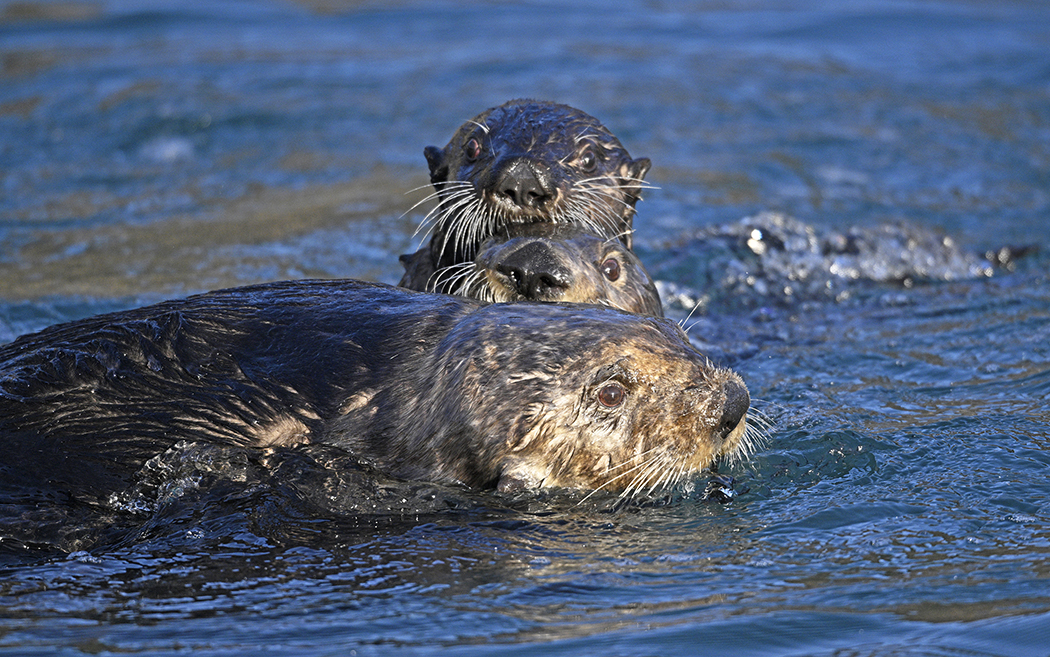
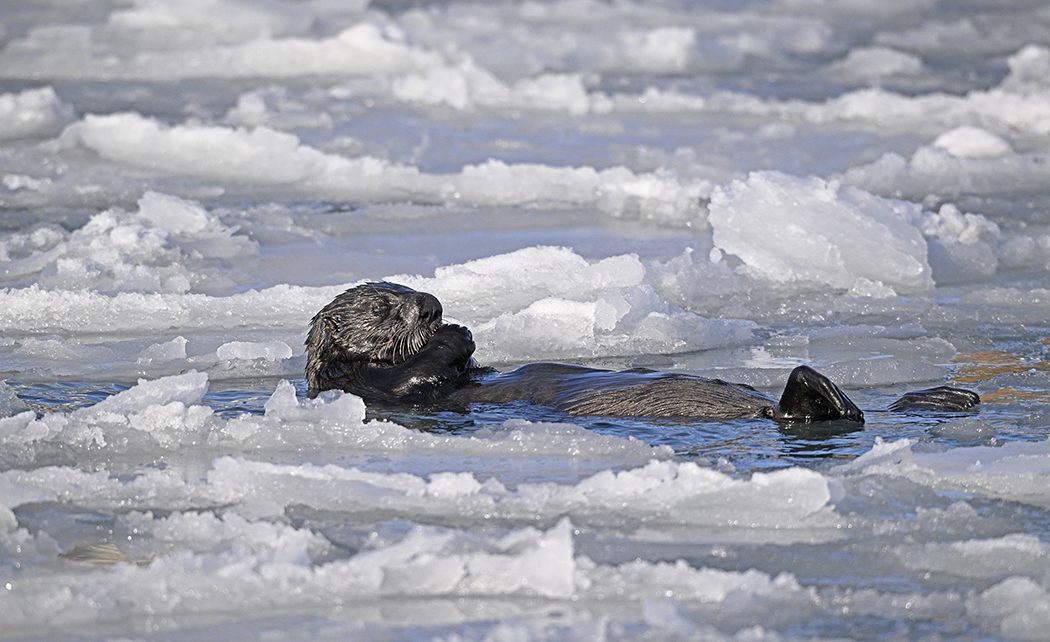
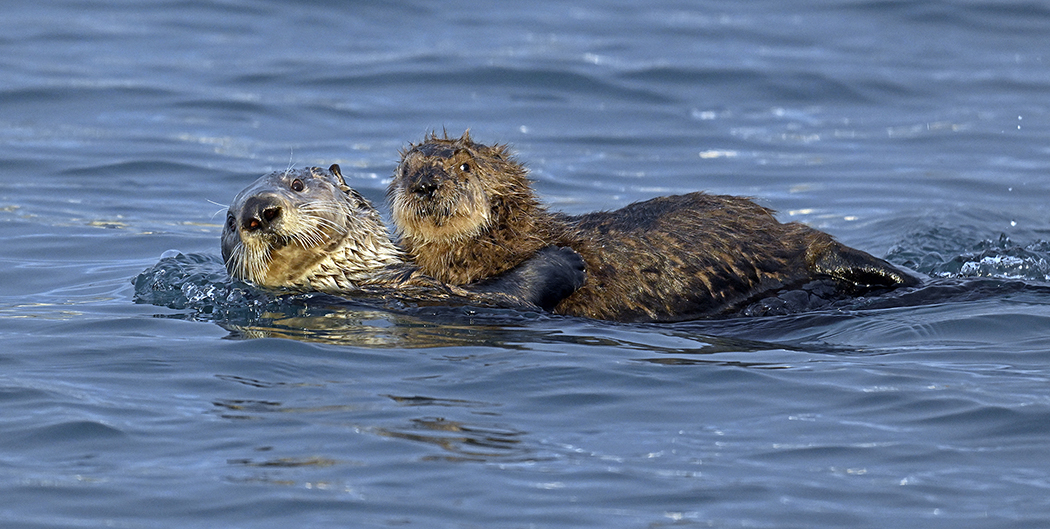
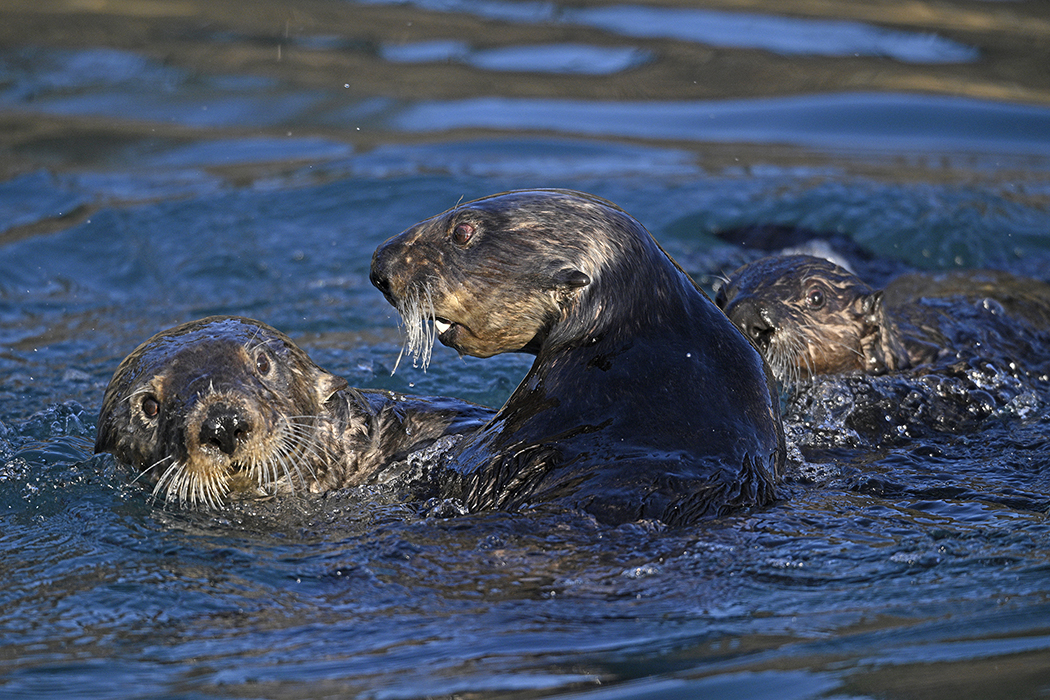
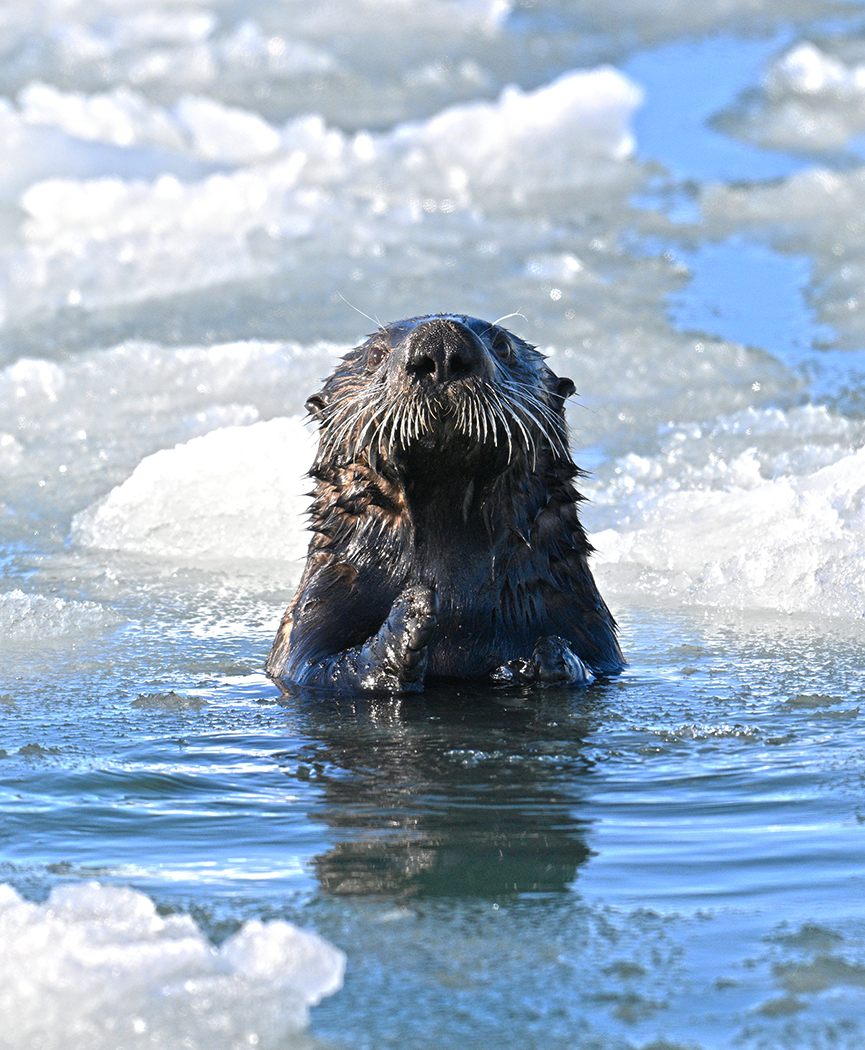
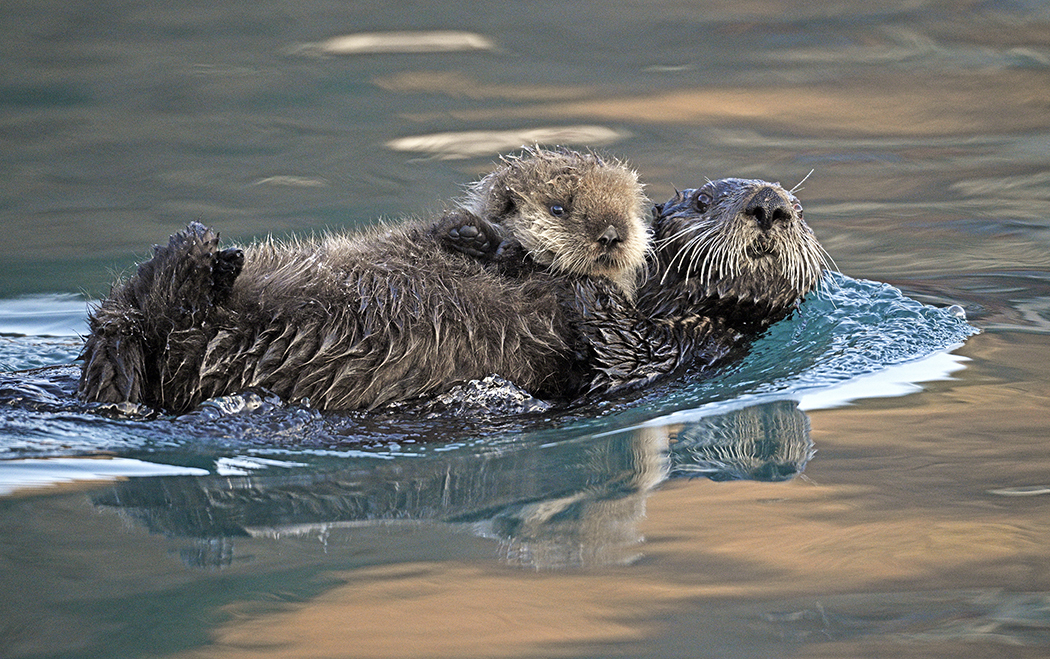
The trip offers more than spectacular eagle photography. Many of the harbors and inlets have sea otters, a distinct, larger race from the southern sea otters from California. Several of them had large pups, often carried on the belly, but big enough to swim on their own. Otters have some of the densest fur on the planet, trapping in body heat while shielding the cold water. What a joy to be able to get so close to several otters in such beautiful conditions. My favorite image of mom with her baby on board came from Halibut Cove, which looks like a Hallmark movie set with all the beautiful homes on the cliffs. Talk about living off the grid!
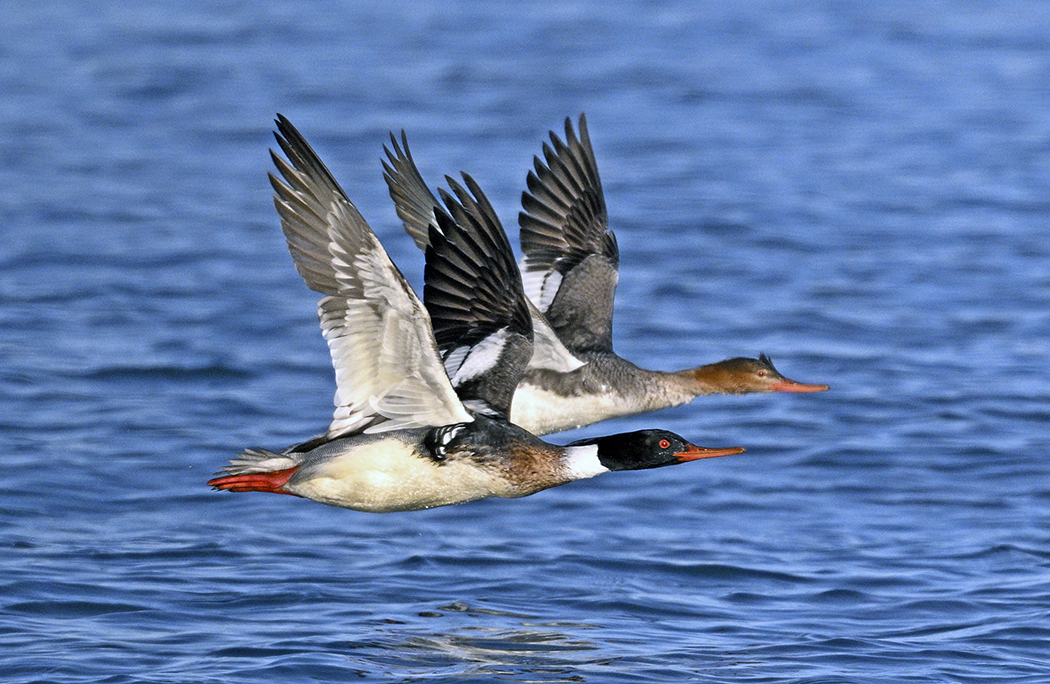
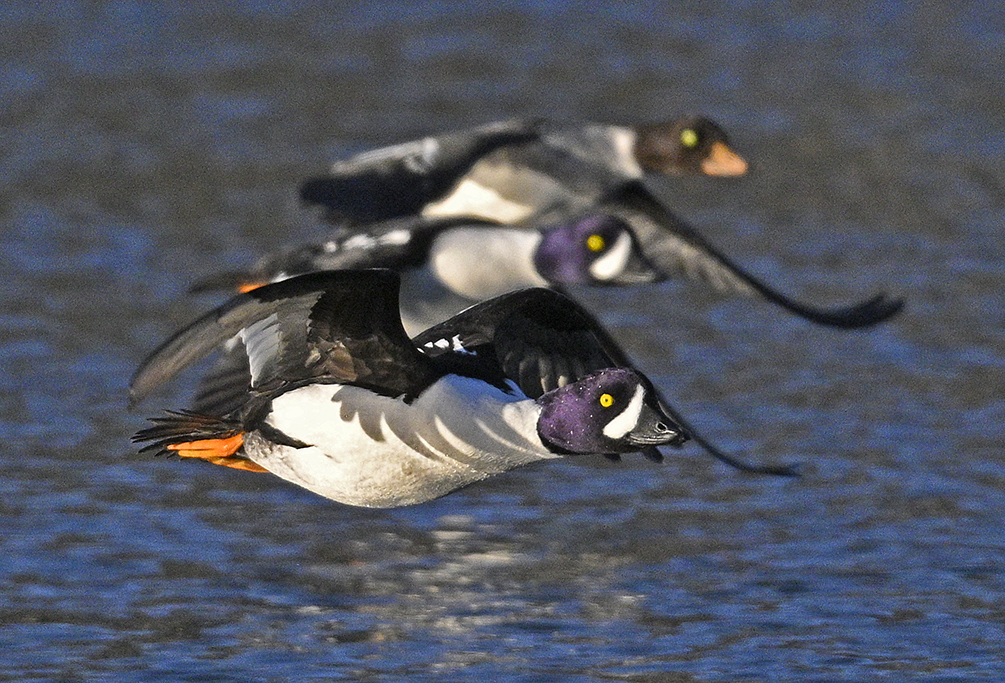
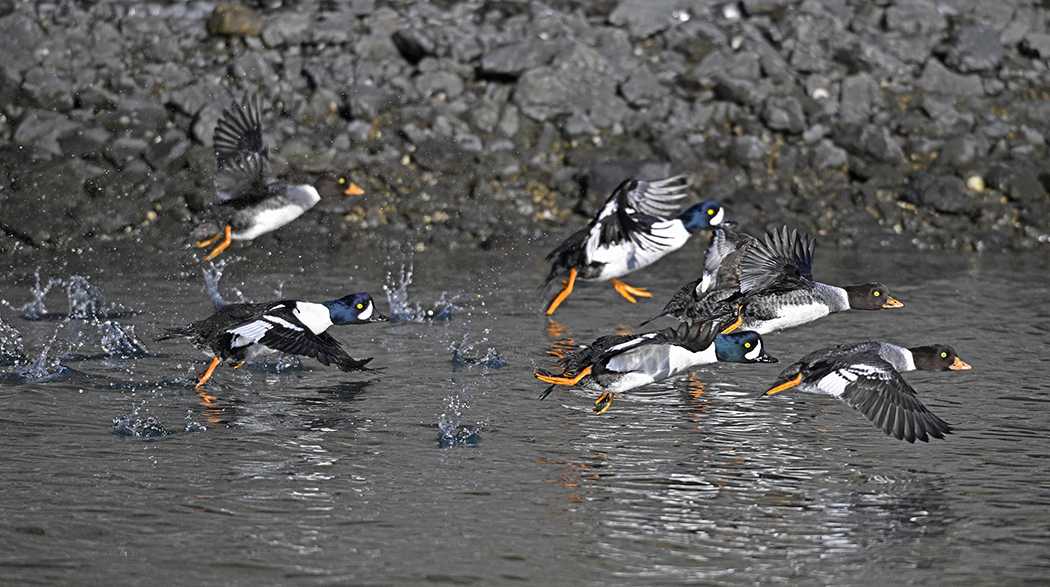
We spent one morning focusing on sea ducks at Halibut Cove, primarily Barrow’s goldeneye, with little flocks of bufflehead, red-breasted mergansers and a few harlequin ducks. As our boat approached them in narrow coves, they would often take flight for open water, creating great opportunities for take-off shots. Diving ducks don’t leap into flight like mallards and other dabblers, but instead must run across the water to gain sufficient speed to get airborne. It’s a track and field meet for ducks, and exhilarating to photograph!
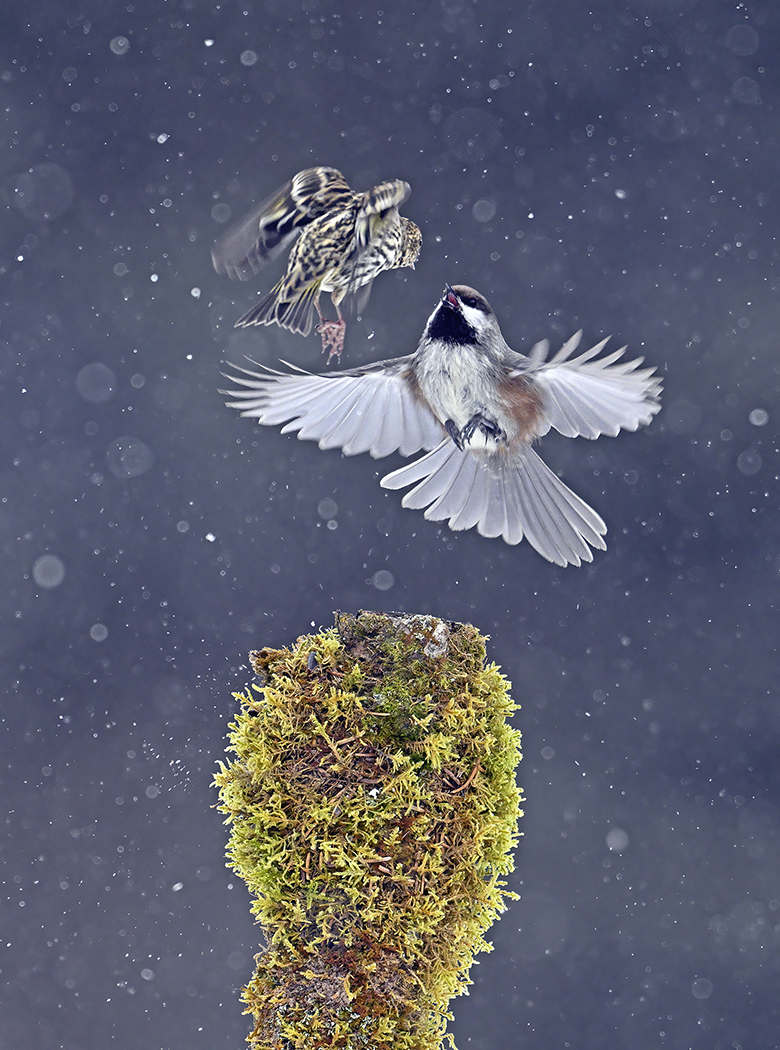
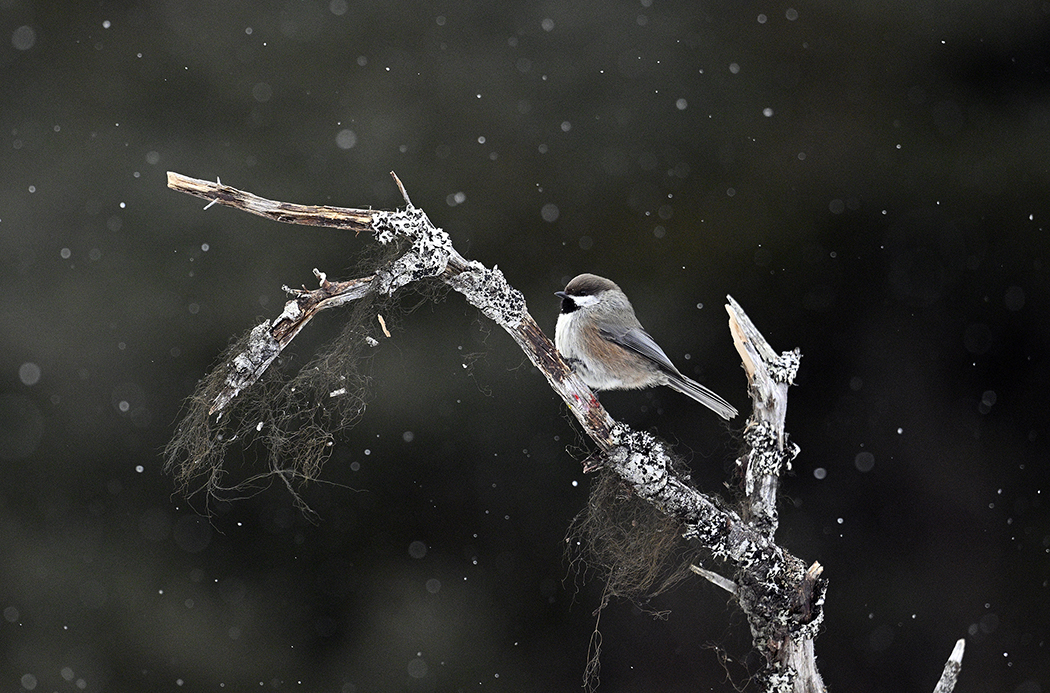
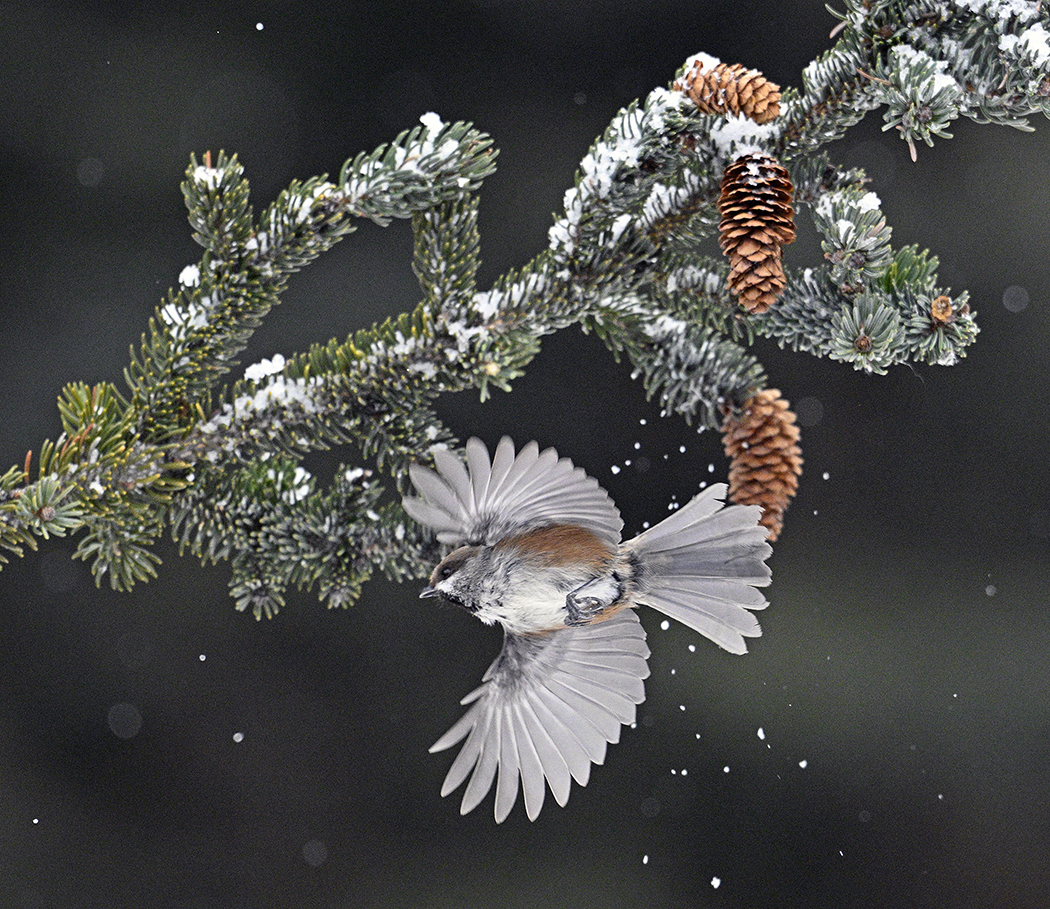
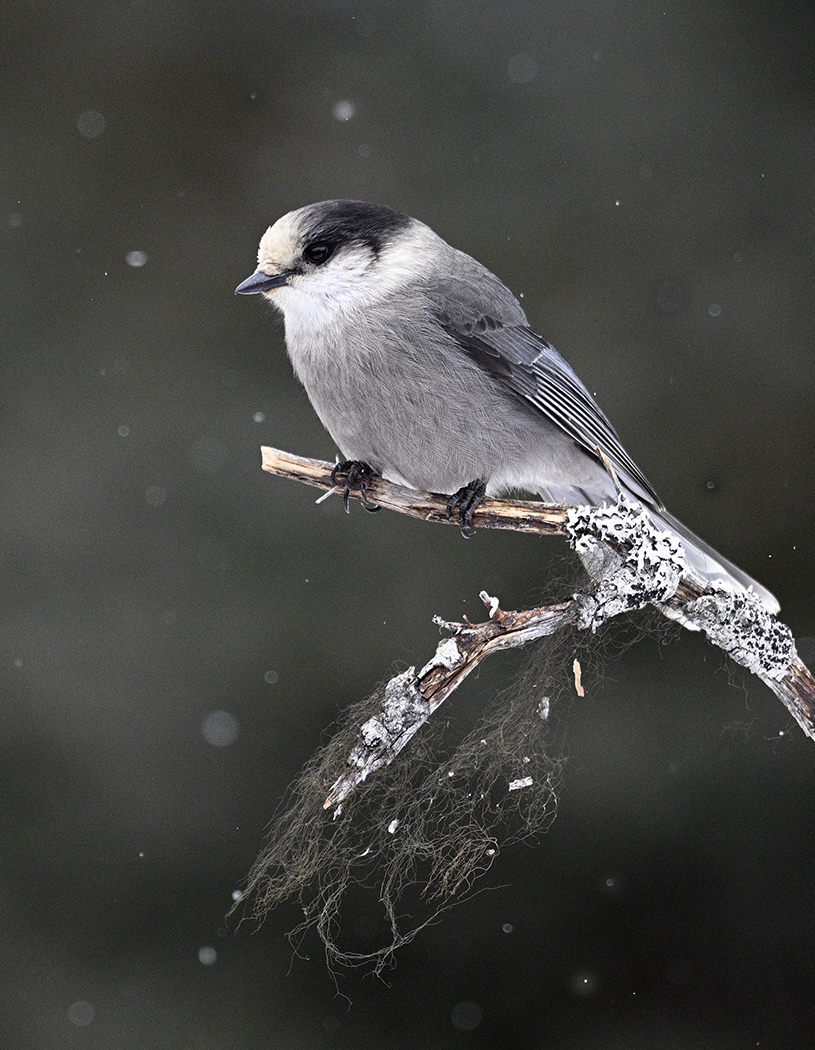
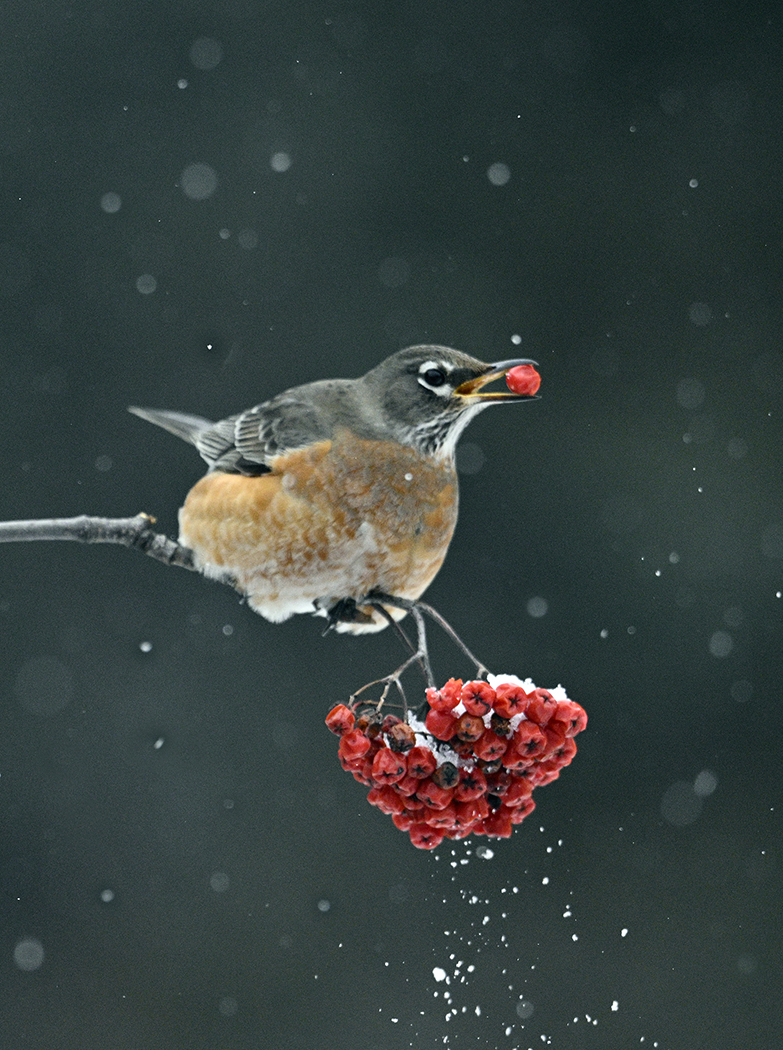
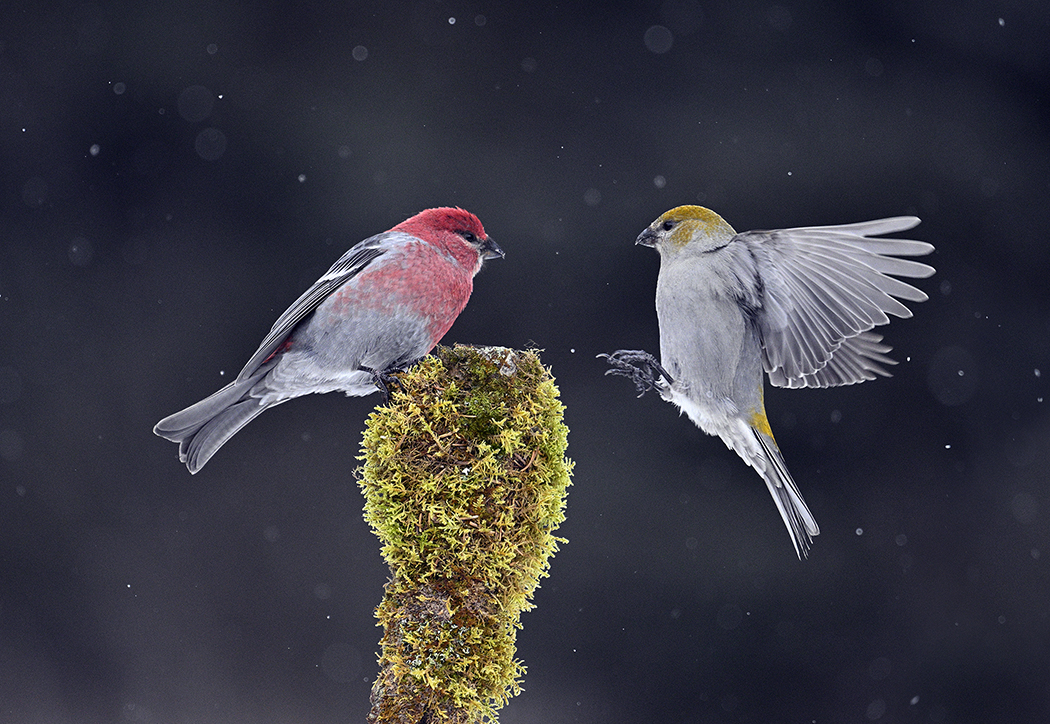
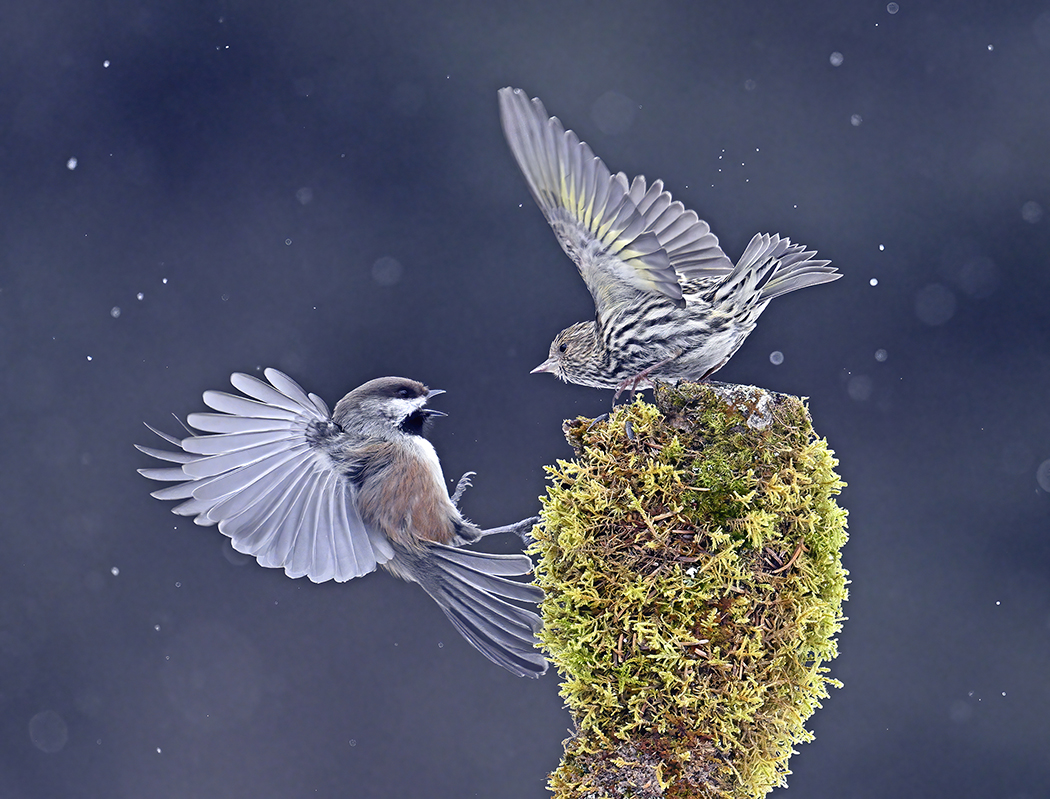
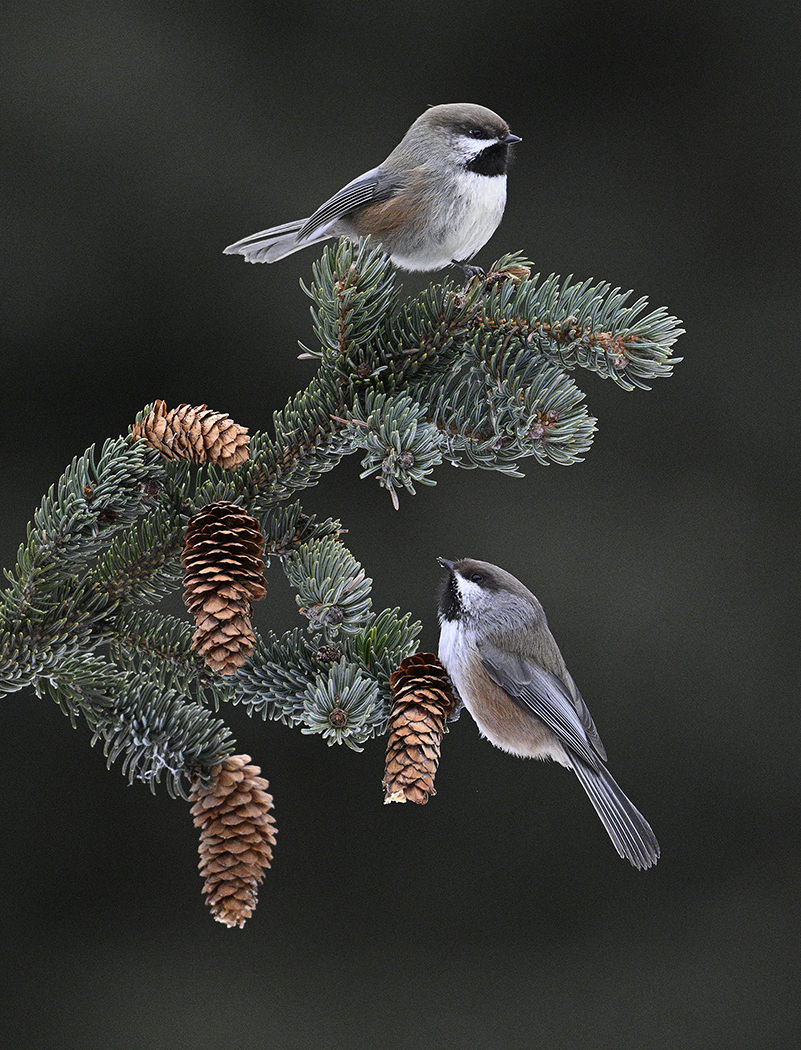
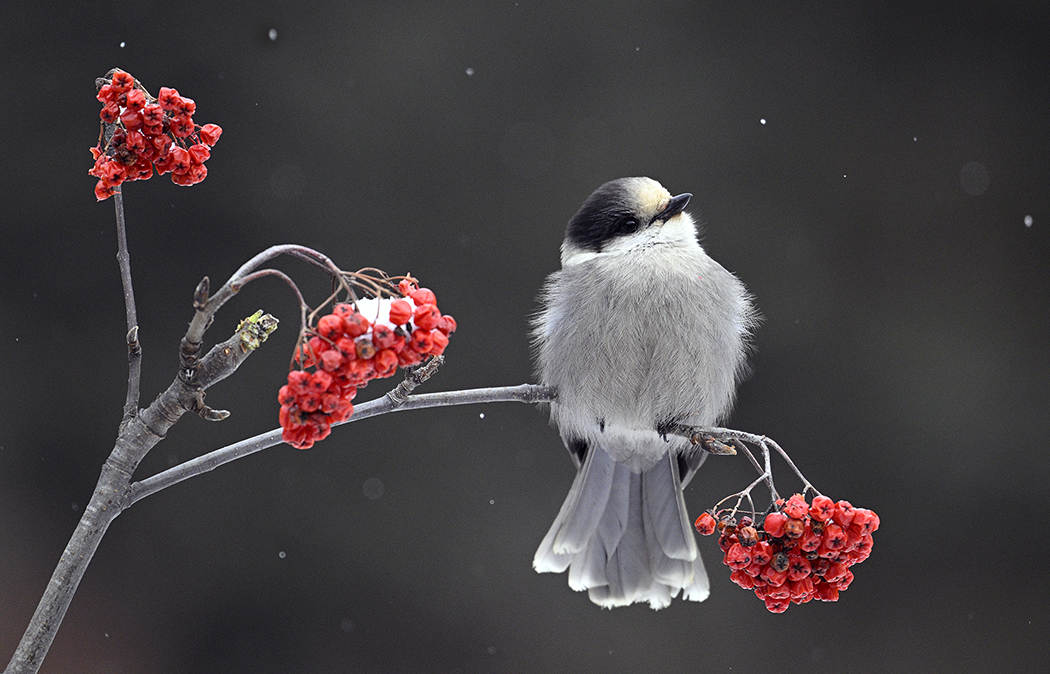
The trip also offered a day with the songbirds. Inland is a family that has active feeding stations all winter long, and we made a visit on a brutally cold day when my feet nearly froze off. Fortunately we were welcome to go inside the adjacent house and warm up whenever we needed, which was quite often. The wood stove saved the day! Despite the bitter cold, the feeders were surprisingly sparse with birds compared to other years here. So we worked with what we had, and then a bit of snow started to fall. To my eyes, winter feeder birds in snow is magic, like a Christmas card, equally soothing and sublime. Our few birds performed well, offering a few splendid moments for the ages. Many thanks to our courageous cast… a half-dozen boreal chickadees, a pair of black-capped chickadees, maybe 4 pine grosbeaks, a lone red-breasted nuthatch, a trio of pine siskins, a Canada jay couple and a lone American robin, a real rarity for this location in winter. An adorable red squirrel also joined in the festivities.
And that wraps up a most memorable and successful trip to Homer, Alaska. There truly is no place like Home(r)! Thank you, Jean Keene, for spreading your love for bald eagles to the entire world. You made the planet a better place with your gifts. God bless America, and may freedom reign from sea to shining sea.